__ When it comes to understanding new information, the human brain needs a little time. First, we hear the words; then, we compare the new information to what we already know. If the two are different, we need to pause and think. But a breathless speaker never stops to let us think about what he or she is saying and risks confusing us. Slow it
__ Sometimes we all start a sentence one way and then switch directions, which is very difficult to follow. When you the audience confuse your listeners with opposing information, you leave the audience wondering what part of the information is right and what part they should remember. Instead of relying and keeping correcting yourself, work to get the facts clear and straight.
__ Jumping from point to point as it comes to your mind puts the onus (责任)on your listeners to make up for your lack of organisation. And it’s confusing for them to listen, reorganise, and figure out what you’re saying all at once. But going smoothly from one point to the next helps them understand information more easily. You can arrange things from beginning to end, small to large, top to bottom or by some other order. Just be sure to organise.
__ Repeated use of um, ah, like, you know and some other useless noises can drive an audience crazy. It makes the speaker sound uncertain and unprepared, and it can leave listeners so annoyed that they can’t pay attention. Recently I attended a speech that was marked by so many ums that audience members were rolling their eyes. Was anybody grasping the intended message? Um, probably not.
__ Many speakers finish up their speeches with question-and-answer (Q & A) sessions, but some let the Q & A go on without a clear end. The audience is often left confused about whether the meeting is over and when they can get up and leave. Do your listeners a favour by setting a time limit on questions, and close your speech with a specific signal—even if it’s something simple like, “If you have any more questions, you know where to reach me.” Or even more to the point, conclude your speech with “Thanks for your time. ”
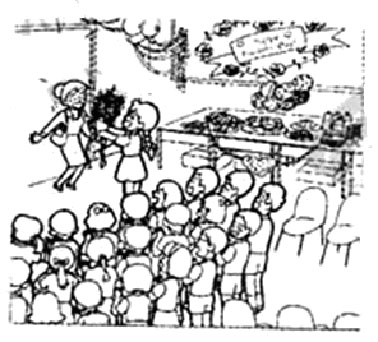
假定你是李华。下面的图画描述了教师节那天你们班组织的一次活动,请根据写作要点并参考图画内容,为校刊“英语角”版面写一篇短文。 写作要点: 1)活动的策划; 2)教室的布置; 3)活动的内容; 4)你的感想。 注意: 1)短文词数不少于100; 2)开头部分已写好,不计入总词数; 3)可根据情况增减细节,详略得当; 4)不能使用真实姓名和学校名称。 Ms. Li, our English teacher, must have found it strange on Teachers’ Day; she did not receive a single greeting card from us students. She would have never thought a complete surprise was waiting for her.
查看答案
Ms. Li, our English teacher, must have found it strange on Teachers’ Day; she did not receive a single greeting card from us students. She would have never thought a complete surprise was waiting for her. As Teachers’ Day was approaching, our class decided to hold a party to celebrate the important day for a change this year. On the afternoon of September 10,some of us decorated our classroom with paper flowers and balloons, and others went to buy cakes, drinks and fruits. The blackboard was decorated with beautiful words, which read “Happy Teachers’ Day!” Entering the classroom, Ms. Li was surprised to find we were standing in line, clapping hands and saying loudly “Happy Teachers’ Day!” Wang Hua, our monitor, presented her with the prepared flowers. Some of the girls sang songs for Ms. Li, and three boys showed their Gongfu talent. Before we left, we enjoyed a new English song by Ms. Li. Ms. Li spent a wonderful time with us, but we know that we cannot thank her enough for all her hard work and guidance.